
Glitter Like Goblin’s Gold - Gathering Moss by Robin Wall Kimmerer
feral wisdom library #1

What is the Feral Wisdom Library?
I am starting a new series here on Substack called the Feral Wisdom Library, where I will sing praises to, and engage deeply with, books and published works that I want to amplify. The tradition of oral storytelling & teaching, as well as reading and dispersing subversive zines and books, has long been a way that oppressed peoples build power, share mutual aid, keep suppressed lifeways alive, and resist oppressive systems and worldviews. It is deeply important for us to read, write, and teach each other, to keep our wisdom - and each other - alive. This is popular education that is not controlled by expensive academic institutions, corporations, or the state. This is Feral Wisdom.
I am a witch: a collector, a channel, a creator. These are all relational ways of being, arising from an interdependent animist way of walking and seeing in the world: I believe all that we are comes from a complex interplay of relationship with other beings. We receive (wisdom, nourishment, protection, inspiration, love, etc.) from other beings; and then from a place of fullness, we respond and create in turn. Other beings can then receive the nourishment our creations provide, and the cycle continues on in reciprocity. Witches, with our fingers woven into the pulse of the earth, understand this cycle. We allow ourselves to be open to receiving what is channeled to and through us, collecting the bones and singing over them to create something new.
As an herbalist, I journey into the forest, searching for plant kin, and I receive the ones who offer their medicine to me. As a Witch and devotee of the Dark Goddess, I descend into the darkness of the Underworld and return glittering with gold dust to offer the community. As a reader, writer, & learner, I engage deeply with the teachings of elders and the writings of those I respect, and I emerge with precious wisdom and practices to share. Here in the Feral Wisdom Library series on my Substack, I share my process of relating with a book and the resultant pearls of wisdom that arise from this relationship. Come along with me, and we will wander through the woods of feral wisdom, gathering medicine along the way.
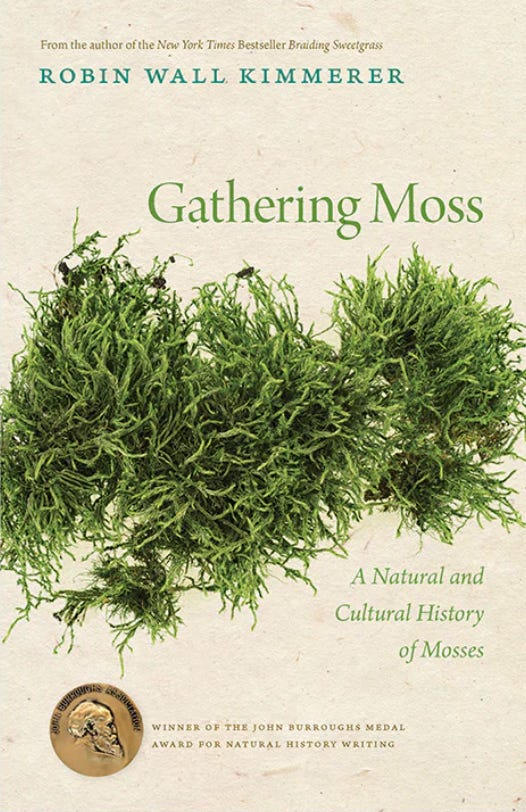
Gathering Moss by Robin Wall Kimmerer
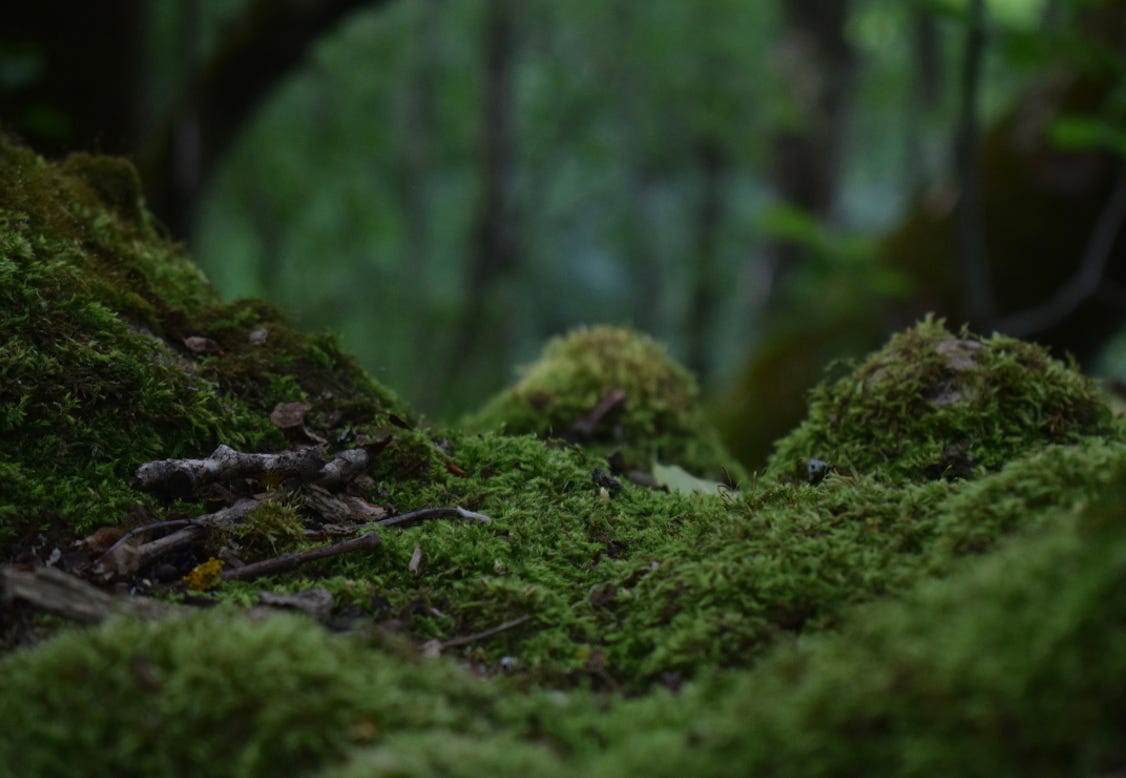
Moss is one of our most ancient ancestors, among the oldest land plants on record. They are a non-vascular plant with over 12,000 species all over the world, and their roles in our ecosystems are powerful and generous, including: breaking down material & releasing nutrients for other plants, preventing soil erosion, storing carbon, and providing habitat for countless other beings.
This month’s book Gathering Moss: A Natural and Cultural History of Mosses explores the fascinating world of mosses through the eyes of Robin Wall Kimmerer, a Potawotomi author, botanist, & one of my most revered living elders. I consider her book Braiding Sweetgrass (2013) to be required reading for those of us who are devoted to the earth and for anyone who is actively reclaiming animism as a worldview. Gathering Moss is Kimmerer’s first book, and it is a perfect introduction to her signature voice: she weaves together intricate ecological science, deep animist relationship with the earth, Indigenous traditional knowledge, playful storytelling, and radical calls for action.
This book is a love letter to moss, a breathtakingly diverse and magickal plant with whom Kimmerer has a lifelong relationship. Throughout the chapters, she weaves stories about her interactions with moss alongside scientific, practical, and mythical information about a wide variety of species of moss. And along the way, she consistently highlights the interdependence of natural ecosystems, how each part - the trees, mycelial networks, mosses, vines, soil, birds, hoofed ones, insects, and more - interact in a highly complex and symbiotic dance of relationship, to collectively create the conditions for life and thriving. This short book is bursting with Kimmerer’s insights, and here I will explore the five pieces of feral wisdom that came alive for me.
1. Return to Animism as Right Relationship with the Earth
It is hard for me to overstate how much Kimmerer’s work has influenced my worldview - reading her books and listening to her speak feels like coming back home to a world that is living and animate, a world where humans have a cherished role and where the beings around us are worthy of our adoration, our communication, our gratitude. Kimmerer’s voice was one of the primary ones calling me back to an animist way of being - a return to a worldview that was natural to me as a child, and a worldview that my ancient ancestors held. In all of her writing, she deftly describes the deep severance that has occurred between humans and the earth (what Holly Truhlar calls “soul severance”); and she sings us back into relationship with the earth, teaching through stories and science how we can return to an ancestral, animist way of being in the world. You can hear the voices of her Indigenous elders and the kaleidoscopic kin of the non-human world speaking through her as she encourages a way of being that prioritizes gratitude, humility, right relationship, interdependence, and breathtaking awe.
In this first of her books, she introduces her beautiful philosophy, what appears to be her life’s thesis, on human-plant relationship, which she explores in much more depth in Braiding Sweetgrass. In the teachings she learned from her indigenous elders, it was understood that each being is welcomed into this world with their own spirit, story, calling, and responsibility to all the other beings. Every being in the ecosystem around us - from stones to animals to plants - has a special gift that it offers to the community; and among the plant beings, each one has a special gift that it offers to humans. When we were rooted in intact lifeways and communities, we grew up in respectful relationships with the beings around us - we knew their names & knew how they could be respectfully partnered with as food, medicine, practical supplies, and in ritual. Now, due to legacies of violent colonial severance, most of us are severely dissociated from the wild green world: “the average person knows the names of less than a dozen plants… Losing their names is a step in losing respect. Knowing their names is the first step in regaining our connection” (101).
As we begin our journey of coming back into right relationship with our earth-kin, we start by turning our loving curiosity toward these beings and learning their names, their role in the ecosystem, and their gifts for us. Kimmerer notes that as she dove into this process with moss, she learned that the plants often show up exactly when and where they are needed, and even when we have forgotten them, they remember us. It took her much research and time spent with moss to discover what she sees as one of moss’ primary traditional gifts to humans: moss was used by some Indigenous peoples as soft, absorbent sanitary pads for menstruating people, and as diapers for babies. They show up along streams and in areas where women are gathering to wash clothing, the perfect place for them to partner with humans in this way. Kimmerer was deeply in awe of this discovery, at the humble, mundane, yet incredibly intimate way this plant has served women, midwives, and menstruating & birthing people throughout time.
And learning about moss’ gifts reminds us that we have a special responsibility as humans: “respect and stewardship. Our responsibility is to care for the plants and the land in a way that honors life” (110). This is the beautiful way that Indigenous traditional knowledge welcomes humans into relationship with the earth, in a way that Western models of “conservation” do not. We learn from Indigenous elders like Kimmerer that humans are not an inevitable drain on the environment - ecosystems evolve in concert with humans, and we have a crucial role to play in tending the land. We are meant to re-learn these practices of healthy disruption and gentle stewardship, not treat large sections of land as “pristine wilderness” that we avoid from a place of fear and shame.
Returning to right relationship with the earth goes hand in hand with re-membering ourselves as animists who can communicate with plants, find belonging in the land, and participate in ongoing cycles of giving and receiving with the beings around us. Kimmerer teaches us to return to relationship with the plant ones, who have been waiting for us to reconnect - learn their names, spend time with them, and honor them for the special gifts they have to offer us. And in turn, we must take up our responsibility to the wild world as tenders.
2. Grieve the Destruction - a Requiem Mass
Kimmerer does not shy away from naming the aching grief that arises when we begin turning back toward relationship with the world. Histories of colonial genocide and ecocide have caused so much harm to the peoples of the world, human and non-human. Because the power structures in this modern world are built on a non-animist, supremacist worldview, this book also hums with a mournful undertone of deep grief and sorrow.
When she stands in a clear-cut forest, where all the trees in an area have been removed for logging or development, Kimmerer is standing in a graveyard: she feels the “grief that rises up from the stumps and soaks into our skin” (144). She decries the violence done to ecosystems through selfish practices like clear-cutting forests & unsustainably harvesting living moss sheets for commercial sale. This is violence perpetrated by white colonial ways of being, on the mosses, on the earth as a whole, and on the Indigenous people of this land and others. In one particular example, she examines the destruction caused by carelessly harvesting living moss from trees to be sold online:
“Every branch has at least a dozen species of moss, in a dozen different shades of green. Eurhynchium, Claopodium, Homalothecium… each of them a work of art, a marriage of light and water to produce a carpet more intricate than anything on the plant. An antique tapestry ripped to shreds and stuffed in a bag. And in the bag are also untold billions of beings who made that moss their home, like birds nesting in a forest. Scarlet Orabatid mites, bouncing springtails, whirling rotifers, reclusive waterbears, and their children: shall I say all their names in a requiem mass?” (153)
As we learned earlier, part of returning to animist relationship is naming the beings around us; and this means we must also name the ones we have lost, in a requiem mass, and allow the pain to wash over us. So much of modern society is built around numbing and avoidance of the violence at its heart, and we must resist this numbing impulse. We must feel the grief of the slashed stumps, the bereft soil, the bones of the lost ones crying out to us. The grief is deep - and this book reminds us that it is necessary to open our tender hearts to this grief instead of numbing, to let it flow through us, so that we may join hands and rise in action to protect and tend the surviving ones.
3. Death Feeds Life & Our Ancestors are Close
There is a chapter in this book that I wish I could read out loud, in its entirety, to everyone reading this - the chapter that made me weep and gave me chills, in its celebration of the Beloved Dead and Indigenous resilience. In her chapter on Sphagnum - peat moss - Kimmerer reminds us that death feeds life, that our lives are built on those of our ancestors, and that we can still communicate with them and dance in their honor.
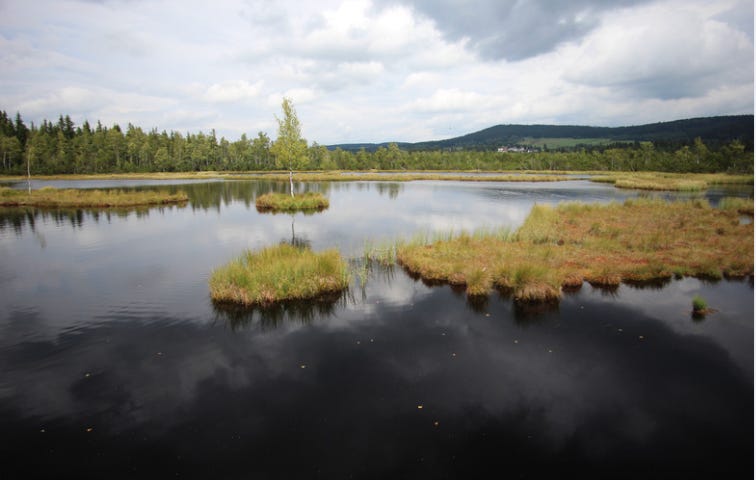
She describes how Sphagnum (peat moss) creates bog ecosystems, forming giant mats of moss cells that hold water, sequester carbon, and completely transform the environment around them. Bogs are unique ecosystems, where some of our oldest ancestors have been found buried - in peat bogs in Denmark, remarkably well-preserved bodies of our Iron Age ancestors have been found, dubbed the Bog People. They may have been sacrificed in agricultural rituals: “their presence speaks to the understanding that life is renewed only through death” (113). And this is the deep wisdom of the bog that Kimmerer points out - the vast majority of the Sphagnum plant that forms the massive peat moss sheets is dead (only one cell in twenty is living). Walking barefoot across the peat in a bog, she is held up by a deep well of ancestral bodies. In the bog, it is impossible to ignore how death is the literal foundation of life.
And the bog is a place of magick, where “the seen and unseen worlds our elders speak of coexist in close proximity, the sunlit surface of the bog and the dark depths of the pond” (111). No wonder witches have often been associated with bogs, places where death so clearly feeds life, and the ancestors are near.
Kimmerer compares the buoyant, living surface of the peat bog to the Water Drum her peoples use in sacred ceremony, which is “bound with a hoop that represents the circle in which all things move; birth, growth, and death, the circle of the seasons, the circle of our years” (111). In the book, she begins to dance on the Sphagnum mats, the reverberations of her steps pulsing through the peat, like the drums her elders pounded on, to be heard by Spirit. She writes, “I feel the power of connection with what has come before, the deep peat of memory holding me up. The drumbeat of my feet calls up echoes from the deepest peat, the oldest time. The pulsing rhythm, persistent, wakens the old ones and as I dance I can hear their faraway songs” (119).
In this way, Kimmerer shows how embodying ritual - through dance, through calling on ancestral memory, and through relationship with the natural kin like Sphagnum - allows us to communicate with the unseen world. Memory and spirit travel through the peat moss, linking the deep water with the sunlit surface. We can be in constant communication with our ancestors & the Beloved Dead through ritual practice, and we can remember that death is a crucial part of the cycle of ongoing life. The world we exist within, the lifeways we inhabit, are held up by the bodies, souls, and memory of the Beloved Dead (people, animals, plants) - and their strength. We the living, like the living cells at the top of the Sphagnum, are held up by all of the memory, lives, and survival of those came before us.
And this is particularly resonant for Kimmerer as a descendant of Indigenous ancestors who were targeted with genocidal campaigns aimed at their elimination. Despite Empire’s strongest attempts to “Kill the Indian”, Kimmerer dances on in defiance, proclaiming with her footsteps pulsing in the memory of her ancestors: “We are still here” (119).
4. Gratitude and Praise is our Responsibility, Our Lifeblood
Knowing that our lives exist in interdependence with our kin, seen and unseen, dead and living, human and non-human, gives us reason to rethink the dominant culture’s focus on entitlement and extraction. From Kimmerer’s description of traditional Indigenous knowledge, what is more important in our relations are not “rights” but “responsibilities” to each other. We are responsible to and for our kin, and one of these responsibilities is to overflow with gratitude to the ones who sustain us: “Indigenous people of these forests, and all over the world, offer traditional prayers of thanksgiving which acknowledge the roles of fish and trees, sun and rain, in the well-being of the world. Each being with whom our lives are intertwined is named and thanked. When I say my morning thanks, I listen a moment for a reply. I’ve often wondered if the land any longer has reason to return gratitude toward humans” (141)
From an animist point of view, gratitude and generosity is the lifeblood running through our ecosystems: we nourish and are nourished, and in return we praise and receive praise. There is something deep within us that longs to worship that which we love, to sing praise songs to the beings who sustain and nourish our lives; and we deeply desire to be praised and adored as well, to know that our beloveds are grateful for our presence. It is devastating to consider that instead of evoking praise and gratitude from the mosses and the forests, our harmful actions only elicit grief. Many humans have become arrogant and gone silent, forgetting that we only exist because of the earth, and harming the forests instead of singing our thanks to them.
Returning to a generosity of tending to the earth with an ethic of sustainability, and daily practice of gratitude to the beings who sustain us, is crucial in these times of collapse:
“Clear-cuts may meet the short-term needs of one species, but at the sacrifice of the equally legitimate needs of mosses and murrelets, salmon and spruce. I hold tight to the vision that someday soon we will find the courage of self-restraint, the humility to live like mosses. On that day, when we rise to give thanks to the forest, we may hear the echo in return, the forest giving thanks to the people” (141, 150)
5. Glitter like Gold in the Dark
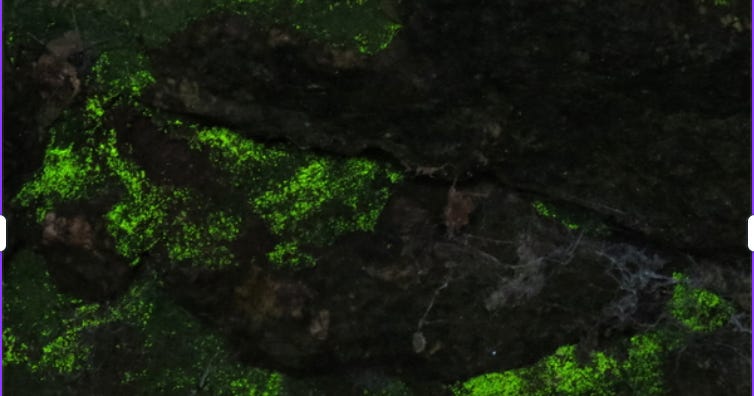
One of the final vignettes in this book celebrates the tenacity, and preciousness, of life through a moss called Shistostega. An incredible moss kin that most of us have probably never heard of, Shistostega, known as “Goblin’s Gold”, is a bioluminescent moss that grows in the darkest of caves and is extremely rare to find. Kimmerer tells stories of her relationship with this moss that she has been privileged to discover in caves during her explorations. As always, in her praise of the beings of our breathtaking world, she calls us back to gratitude: “The combination of circumstances which allows it to exist at all are so implausible that Shistostega is rendered much more precious than gold. Goblin’s or otherwise… Its life and ours exist only because of a myriad of synchronicities that bring us to this particular place at this particular moment. In return for such a gift, the only sane response is to glitter in reply” (162).
Even after describing in detail the grief of the natural world and all the ways we have harmed this essential relationship, I am always so struck by how hopeful Kimmerer is. It must be her deep, embodied, tangible relationship with the plants she studies, tends, and praises, as well as her rootedness in Indigenous teachings and lifeways. She always brings us back to a remembrance of who we are as carriers of medicine, just like every being in the ecosystem.
We can glitter in the dark, too: to light the way for those around us and to proclaim our gratitude for our lives. May we all find our own unique ways to glitter in these dark times, to humbly honor Indigenous elders & fight for Indigenous sovereignty, to come back into right relationship with all of our non-human kin, and to carry the specific medicine that lives within each of us and yearns to be shared with the world.
Kimmerer’s feral wisdom in this beautiful book reminds us to learn the names and the gifts of the wild ones, to praise the kin we love, to grieve the lost ones, to speak to and dance with the dead, and to take up our responsibility to carry our medicine, glittering like Goblin’s Gold. May this Feral Wisdom be a prayer for a return to relationship with the earth-kin, with our Beloved Dead, with our bodies, and our selves.
If you would like to read this incredible book for yourself and support Kimmerer’s work, check it out from your local library or purchase it here at Bookshop.org. Thank you for supporting me in this way through Bookshop.org, which bypasses Amazon/other big corporations and supports independent bookstores.